
Hygiene Poverty
Understanding Hygiene Poverty

The Hidden Crisis Affecting Millions
Every day, millions of Americans face an impossible choice: pay for food and rent, or buy soap and toothpaste. This silent struggle has a name, hygiene poverty, and it affects far more people than most realize. Unlike hunger or homelessness, hygiene poverty remains largely invisible, hidden behind closed doors and carried in quiet shame.
Giving the Basics, America’s Hygiene Hub, has distributed over 36 million hygiene products to more than 3.6 million people through our network of partner locations. We understand hygiene poverty because we see it every day, and we know that access to basic hygiene products is fundamental to human dignity.
What Is Hygiene Poverty?
Hygiene poverty is the inability to afford basic personal care and household cleaning products necessary for health, dignity, and full participation in society. These essential items include soap, shampoo, toothpaste, deodorant, feminine hygiene products, diapers, laundry detergent, and toilet paper—products most people use without a second thought.
The term “hygiene insecurity” is sometimes used interchangeably to describe this condition, emphasizing the uncertainty and stress that comes with not knowing whether you’ll be able to afford these necessities from month to month.
Hygiene Poverty Statistics: The Scope of the Crisis
Research from Feeding America, conducted in partnership with the University of Illinois at Urbana-Champaign and Abt SRBI, reveals the staggering scope of hygiene poverty in America.²

- One in three low-income families (34%) reports difficulty affording basic household necessities, including hygiene products. When forced to choose between competing needs, hygiene is often the first thing families sacrifice.²
- Thirty-three percent of low-income households report bathing without soap when they cannot afford body wash. This isn’t a matter of choice, it’s economic necessity.²
- Nearly three-quarters (74%) of families who can’t afford household necessities skip doing laundry or washing dishes to conserve supplies. Of these families, 63% prioritize washing only their children’s clothes.²
- Thirty-two percent of families report reusing diapers when they cannot afford new ones, a practice that can lead to painful rashes and infections in infants.²
According to the U.S. Census Bureau, 35.9 million Americans (10.6% of the population) lived in poverty in 2024, a population for whom affording basic hygiene products presents a daily challenge.³
Who Is Affected by Hygiene Poverty?
Hygiene poverty doesn’t discriminate. It affects people across every demographic, geographic region, and life circumstance. However, certain populations face heightened vulnerability.


Children and Students
Children are among the most affected by hygiene poverty. According to the U.S. Department of Education, chronic absenteeism, defined as missing 10% or more of the school year, affects approximately 30% of students nationwide.⁴ Research has established a direct connection between access to clean clothes and school attendance.
The Whirlpool Corporation’s Care Counts program, developed in partnership with developmental psychologist Dr. Richard Rende and Teach For America, has documented this connection through nearly a decade of research. Their findings show that nearly 74% of participating high-risk elementary students decreased their level of chronic absenteeism when given access to laundry facilities at school, and students gained an average of 16 additional school days per year.⁵
Working Adults
For adults, hygiene poverty creates barriers to employment and professional success. Maintaining a clean, professional appearance is essential for job interviews, workplace acceptance, and career advancement. Without access to basic hygiene products, adults may struggle to secure or retain employment, perpetuating the cycle of poverty.
Seniors
Older adults living on fixed incomes face particular challenges. Rising costs for medications, housing, and food often leave little room for hygiene products. Incontinence products, which are essential for many seniors, are especially expensive and typically not covered by Medicare or other assistance programs.
Families with Young Children
Parents of young children face the significant expense of diapers, a cost that can exceed $1,000 per year per child. A peer-reviewed study published in Pediatrics, the journal of the American Academy of Pediatrics, found that nearly 30% of mothers in low-income urban communities reported diaper need. The study also found a significant connection between diaper need and maternal mental health challenges.⁶
Without access to affordable diapers, parents may leave babies in soiled diapers longer than is healthy, leading to painful diaper rash and potential infections. Many daycare facilities require parents to provide diapers, creating an additional barrier to childcare and employment.
People Experiencing Homelessness
Individuals without stable housing face compounded challenges in maintaining hygiene. Without access to showers, laundry facilities, or secure storage for personal items, staying clean becomes extraordinarily difficult. Research indicates that people experiencing homelessness face significantly higher rates of skin infections, dental problems, and other hygiene-related health conditions.
Frequently Asked Questions
Hygiene poverty has serious and measurable health consequences. What begins as a financial problem quickly becomes a medical one.
Physical Health: Poor hygiene increases vulnerability to skin infections, respiratory illnesses, gastrointestinal diseases, and dental problems. Simple preventive measures like regular handwashing and dental care, impossible without the necessary products, could prevent many of these health issues.
Mental Health: The psychological burden of hygiene poverty is profound. The Pediatrics study found that women who reported mental health needs were significantly more likely to also report diaper need, suggesting a connection between material hardship and psychological well-being.⁶ The inability to maintain personal cleanliness erodes self-esteem and can lead to social isolation.
Child Development: For children, the effects can be long-lasting. The trauma of being teased or excluded because of hygiene issues can affect children well into adulthood, impacting self-worth, confidence, ability to form friendships, and even future employability.
One of the most surprising facts about hygiene poverty is that federal assistance programs like SNAP (Supplemental Nutrition Assistance Program, commonly known as food stamps) and WIC (Women, Infants, and Children) do not cover hygiene products. According to the U.S. Department of Agriculture, SNAP benefits can only be used to purchase food items—cleaning supplies, paper products, and hygiene items are explicitly excluded.¹
This gap in the social safety net means that families using government assistance must pay for hygiene products entirely out of pocket—often from already stretched budgets. A single parent purchasing groceries with SNAP benefits will see hygiene items removed from their cart at checkout if they don’t have separate funds to cover them.
Adding to the burden, hygiene products are frequently subject to sales tax while food and medicine are often exempt. This effectively places an additional financial penalty on families struggling to stay clean.
A hygiene bank operates on a model similar to food banks but focuses specifically on collecting and distributing personal care and household cleaning products. These organizations serve as centralized distribution hubs, gathering donations from individuals, corporations, and product manufacturers, then channeling those products to community partners who serve people in need.
The hygiene bank model recognizes that just as a single meal doesn’t solve hunger, a single hygiene kit doesn’t solve hygiene poverty. Sustainable access to hygiene products requires ongoing support through established distribution networks.
Hygiene banks typically partner with schools, homeless shelters, domestic violence shelters, senior centers, food pantries, police departments, and other community organizations already serving vulnerable populations. This partnership model ensures products reach people where they already seek help.
A hygiene charity is any nonprofit organization dedicated to addressing hygiene poverty and improving access to personal care products. While some hygiene charities operate as hygiene banks with large-scale distribution networks, others focus on specific populations (such as students or homeless individuals) or specific products (such as diapers or menstrual products).
Effective hygiene charities do more than distribute products—they also work to raise awareness about hygiene poverty, advocate for policy changes, and partner with communities to create sustainable solutions. The best organizations maintain dignity and choice for recipients, allowing individuals to select products appropriate for their needs, preferences, and cultural backgrounds.
Understanding which products are most needed helps donors and supporters maximize their impact. While all hygiene products serve important purposes, certain items are consistently in highest demand.
Most Needed Items: Laundry detergent, shampoo and conditioner, deodorant, feminine hygiene products, lotion, toothpaste, and toilet paper consistently top the list of most-requested products. These items are used frequently, run out quickly, and represent significant expense for families on tight budgets.
Additional Essential Products: Beyond the most-needed items, comprehensive hygiene support includes body soap, dental floss, toothbrushes, facial cleanser, facial tissues, shaving supplies, diapers for infants, incontinence products for adults, and household cleaning supplies like trash bags and disinfectants.
Ending hygiene poverty requires collective action from individuals, businesses, and communities. There are many meaningful ways to contribute to this effort.
Donate Products: Hygiene hubs like Giving the Basics accept new, unused personal care and cleaning products. Consider adding an extra item to your shopping cart each week, or organize a product drive at your workplace, school, or place of worship.
Give Financially: Monetary donations allow hygiene charities to purchase products in bulk at significant discounts, maximizing the impact of every dollar. As little as $25 can provide an entire month of hygiene products for an individual in need.
Volunteer Your Time: Hygiene hubs need volunteers to sort donations, pack hygiene kits, and assist with distribution events. This hands-on involvement creates direct connection to the community impact.
Host a Dignity Drive: Organize a collection drive in your community to gather hygiene products. Whether virtual or physical, dignity drives engage your network in the cause while generating significant product donations.
Spread Awareness: Many people don’t know that hygiene poverty exists or that government assistance doesn’t cover hygiene products. Sharing information about this hidden crisis helps build understanding and support for solutions.
Advocate for Change: Support policies that address hygiene poverty, such as exempting hygiene products from sales tax, expanding assistance programs to cover personal care items, or funding hygiene programs in schools.
The Hygiene Hub Model:
A Comprehensive Approach
A hygiene hub represents the most comprehensive approach to addressing hygiene poverty, combining large-scale collection and distribution with community partnership networks and advocacy efforts.
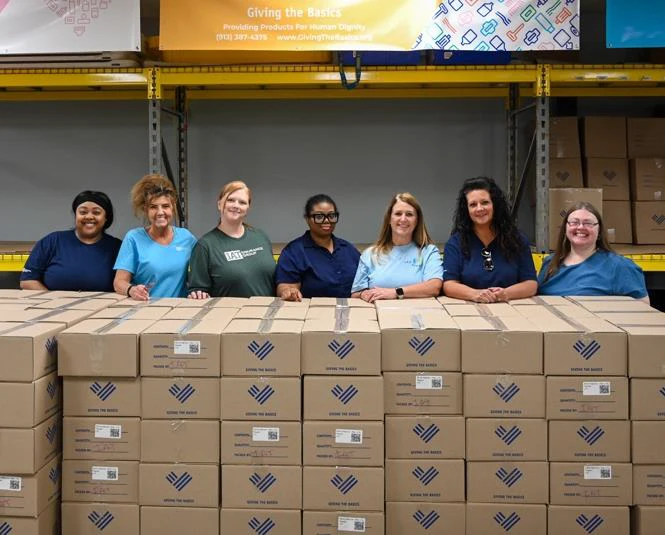
Giving the Basics, America’s Hygiene Hub, exemplifies this model through our work with over 2,500 partner locations across the country. Our warehouse operations receive, sort, and distribute millions of hygiene products annually, while our community partnerships ensure these products reach the families, children, and seniors who need them most.
The hygiene hub model creates efficiency through scale, bulk purchasing and corporate partnerships reduce per-unit costs, while centralized warehousing and distribution maximize the impact of every donation. At the same time, local partnerships ensure cultural sensitivity and community connection.
Sources
1. U.S. Department of Agriculture, Food and Nutrition Service. What Can SNAP Buy? https://www.fns.usda.gov/snap/eligible-food-items
2. Feeding America. In Short Supply: American Families Struggle to Secure Everyday Essentials, 2013. Research conducted in partnership with the University of Illinois at Urbana-Champaign Family Resiliency Center and Abt SRBI. https://www.feedingamerica.org/research/poverty-and-unemployment/in-short-supply
3. U.S. Census Bureau. Poverty in the United States: 2024, September 2025. https://www.census.gov/library/publications/2025/demo/p60-287.html
4. U.S. Department of Education. Chronic Absenteeism in the Nation’s Schools. https://www2.ed.gov/datastory/chronicabsenteeism.html
5. Whirlpool Corporation. Care Counts Laundry Program, 2023-2024 Academic Year Data. Research conducted in partnership with Dr. Richard Rende, Ph.D., developmental psychologist, and Teach For America. https://www.whirlpoolcorp.com/latest-news/whirlpool-brand-increases-access-to-laundry-in-schools-through-its-care-counts-laundry-program.html
6. Smith MV, Kruse A, Weir A, Goldblum J. Diaper Need and Its Impact on Child Health. Pediatrics. 2013;132(2):253-259. Published by the American Academy of Pediatrics. https://pubmed.ncbi.nlm.nih.gov/23897910/

